This Singapore biotech start-up is making milk without animals or humans
Advertisement
People
This Singapore biotech beginning-upwardly is making milk without animals or humans
Tin can milk be made in a lab, and tin can it be more environmentally friendly? The founders backside TurtleTree Labs envision a world where milk and dairy products can be derived without harming the planet.

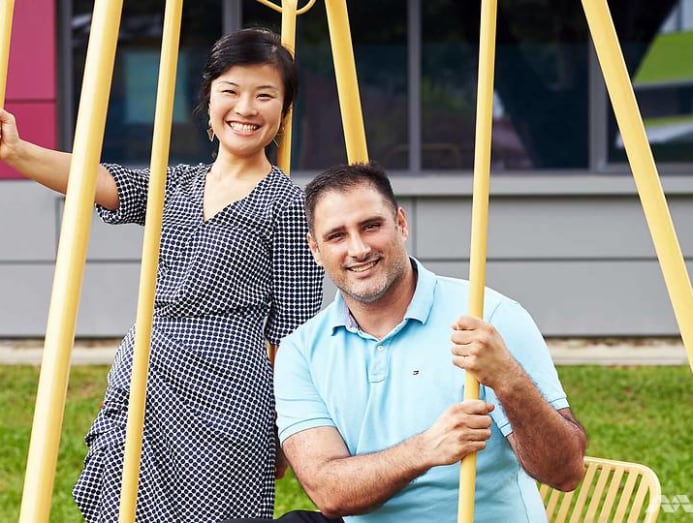
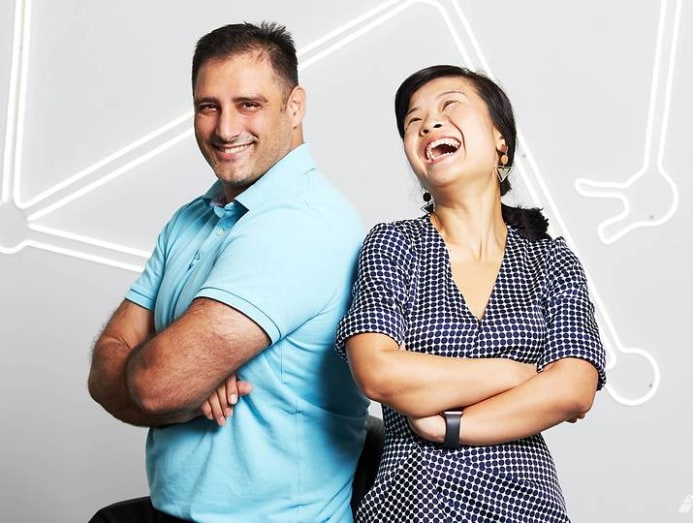
The co-founders of TurtleTree Labs, Primary Strategist Max Rye, and CEO Lin Fengru. (Photo: Kelvin Chia)
09 Nov 2022 06:30AM (Updated: 04 Jul 2022 01:34PM)
Information technology's the year 2020. Self-driving cars are being tested, flying taxis may soon become a reality, and meat substitutes can be derived from plants. Engineering has come up such a long way, information technology'southward almost like we're living in a real life sci-fi movie.
In Singapore, ane starting time-up is making milk in a lab, without the demand for cows, humans or any mammal, for that matter. TurtleTree Labs touts itself as the globe'due south first biotech company to utilize cell-based methods to make lab-grown milk, while retaining the same gustatory modality and composition equally milk derived from natural means.
While the engineering science may exist difficult for many grasp, it's an innovation that has won the company several awards.
In July this yr, the start-up was crowned the grand winner of The Liveability Challenge 2020, an almanac search for solutions to some of the biggest problems faced by Southeast Asian cities. The company was awarded a grant of Due south$1 million by Temasek Foundation to develop its production in Singapore, and eventually scale upwardly its solution in Asia and beyond.
More than recently, TurtleTree Labs took home the top prize for the prestigious Entrepreneurship Earth Loving cup 2020, walking away with a cash prize of Usa$500,000. The global competition, which attracted 175,000 participants from 200 countries, aims to uncover the adjacent generation of entrepreneurs.
TurtleTree's journey all began with cheese, the start-upwardly'due south CEO revealed. "I had a hobby of making cheese in the past. And to make good cheese, you need [high-quality] raw milk. I [travelled] all around Asia, only I shortly realised that at that place were problems with cattle farming [in the region]. There were hormones and antibiotics existence pumped into the cows, and equally a result, the milk suffered," shared Singaporean Lin Fengru.
Back and then, Lin was working at Google. It was there that she met TurtleTree's Main Strategist, California native Max Rye, who was formerly the CEO of a tech visitor in Silicon Valley. Rye had come to Google for a sharing session on transformative technologies, including companies making meat and seafood from cells.
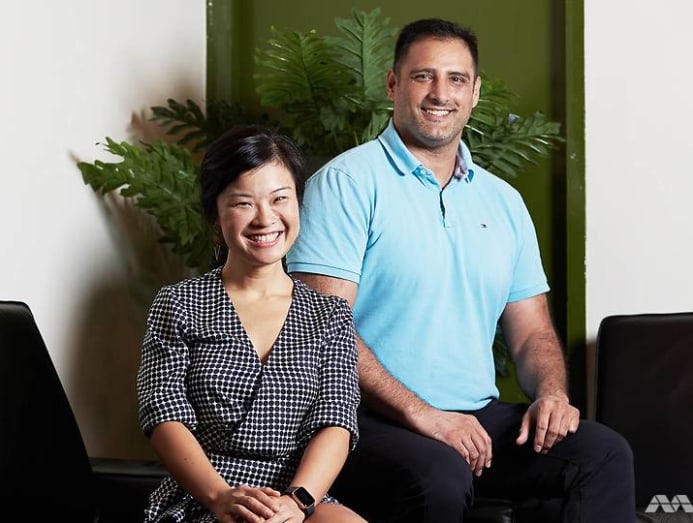
"After the talk, I went to him and asked if there were like methods nosotros could use to make milk. Back then, there was no other company doing information technology, then we decided to do some research into this surface area. We pulled in some scientists friends and last year, nosotros managed to make some breakthroughs. We filed our patents, and now we take a squad of over 20 full-time scientists and engineers."
Make clean MILK FOR GENERATIONS
Simplifying the science behind the creation of milk in a lab, Lin explained, "We're able to isolate cells directly from freshly expressed milk. Many people might not know this, but when a mother expresses milk, within the first few hours, there are still live cells within that milk. We're able to isolate these cells and grow them into a large number. Subsequently, we put these cells into an environment that is similar to what is in a cow udder or homo chest. The cells will then convert in this lactation media, and the finish result is fluid milk."
The overall vision of the company, Rye shared, is to provide nutrient in the form of milk and dairy products to the globe, without having to damage the planet.
"Today, cattle farming accounts for 37 per cent of global methane emissions. We also know information technology requires land, and a lot of other resources, to raise cattle," Rye said. "How do we continue to feed people without the carbon impact? In the long term, we desire to exist able to provide the globe with nutrient in a sustainable way. And here in Singapore, food security is a big consequence, so how do we address that?"
"If you lot await at dairy, it'south the largest food segment in the world, worth US$700 billion (S$944 billion) dollars. This way, TurtleTree tin can really make a massive bear on," Lin added.
While the visitor started off by creating cow's milk, it is too exploring making breast milk and looking at the many valuable biologically agile components that are present within it.
"The potential applications of our technology are wide-ranging. We can potentially create milk from almost any mammal. Right from the showtime, we had a huge interest from all the big infant formula milk companies," said Rye.
Formula milk might not be able to friction match the limerick of breastmilk, merely many women have problem breastfeeding. TurtleTree's lab-grown chest milk is hoping to accomplish similar composition to human breast milk, the company said.
Applying their science to create man breast milk will allow the company to take aim at a multibillion-dollar industry currently valued at US$45 billion. TurtleTree Labs hopes to strategically collaborate with different organisations and institutes to penetrate this market, potentially building revenue from an early phase.
"We are able to use that every bit an opportunity to build a very strong business early on on, as we fix our long-term goal to transform how the world accesses dairy," said Rye.
"How do we continue to feed people without the carbon impact? In the long term, we want to be able to provide the world with food in a sustainable way." – Max Rye
DRIVING FOR CHANGE
To help the company advance, TurtleTree Labs has received support from several agencies, including the Singapore Food Bureau (SFA), Agency for Science, Technology, and Research (A*STAR), and Enterprise Singapore. "These agencies take become almost an extension of our R&D in a way," Rye said.
The decision to be based in Singapore has proven to be the right move. "We probably wouldn't go as much support if we were in a unlike metropolis, or a different country. The government agencies are really behind united states of america considering of Singapore'due south goal to produce 30 per cent of its own nutritional needs past 2030, so we're simply very fortunate to be here," Lin added.
As intriguing as the engineering science sounds, both founders are acutely aware that consumer acceptance is i of the hurdles they will run across. "Considering the technology is so novel, consumer acceptance, regulatory bug, these are challenges we're going to face," Rye acknowledged.
While skeptics may exist, Lin and Rye believe that it's the younger generation who would resonate with the company'southward goal. "We are very fortunate considering young people these days are driving for change. They really desire to make the right decisions when information technology comes to choosing the food that they consume," Lin said.
"Information technology's not only the acceptance of new technologies like this. We're at a time when it has get expected for corporations and large companies to create solutions that don't destroy the planet. This is what the young folks are pushing for. They want to have a amend world to live in. If we tin can build a solution that is aligned with what they're looking for, there's a large win there for both sides," Rye enthused.
As part of the company's corporate social responsibility (CSR) efforts, TurtleTree is besides collaborating with the Smithsonian Institute on a projection to create milk for endangered animals in captivity, such as elephants and snow leopards.
In detail, snow leopards in captivity tend to assault their young. Thus, the mother needs to be separated from her cubs. At that place are too orphaned baby elephants that do not survive in captivity, as the milk they receive is not as nutrient-dense as milk derived from the mother elephant.
"When we first announced that we were going to make moo-cow's milk, we had all these printing reports get out. Of a sudden, there was interest from areas nosotros never expected. The Smithsonian Institute reached out to u.s. to ask if our technology could help these animals in captivity. And for the states, it's very inspiring. With our technology, nosotros can aid the most vulnerable babe mammals on this planet," said Rye.
"We are very fortunate because young people these days are driving for change. They really want to make the right decisions when it comes to choosing the nutrient that they consume." – Lin Fengru
MAKING A MEANINGFUL IMPACT
While Lin and Rye have always been involved in the tech world during their careers, they now feel similar they're making an bodily impact on the earth.
"Fifty-fifty though I've been an executive for and then many years, I always questioned if I was doing anything to help this planet. I whined about information technology, I complained about it. Simply notwithstanding, I wasn't a part of the solution. So now that I have this opportunity, I can directly apply my leadership skills to brand an impact," Rye mused.
Looking towards what the time to come holds for TurtleTree Labs in the next five to x years, Lin said, "Nosotros imagine most of the dairy products out there to have the TurtleTree logo on the cover, showing that this milk was sourced through TurtleTree methods or technology."
The company's logo resembles both the cantankerous section of a tree, equally well as a thumbprint. Explaining the rationale behind both the logo and company name, Lin said, "Turtles and trees are symbols of longevity, and nosotros believe in the longevity of the animals and planet."
TurtleTree also hopes to play a bigger part in solving the issue of food security in Singapore, shared Rye. "In a place like Singapore, if you accept your own dairy and your ain milk, that's going to exist a huge change. You will be a lot less reliant on the global supply chain, and during this pandemic, we've seen that this is really very fragile. Nosotros would beloved to be a part of the Singapore food story."
"In a place like Singapore, if you have your own dairy and your own milk, that'south going to exist a huge modify... We would honey to be a function of the Singapore food story." – Max Rye
READ> The Cameron Highlands farmers supplying ethical, organic produce to Singapore

Recent Searches
Trending Topics
Source: https://cnalifestyle.channelnewsasia.com/people/singapore-biotech-start-up-turtletree-labs-236171

Post a Comment for "This Singapore biotech start-up is making milk without animals or humans"